


After three months of tracking both food and exercise, seven participants banked 3,225 longevity hours—134 days—demonstrating how dietary choices compound with physical activity to extend healthspan.
This wasn’t about restriction or perfection. The Plate Challenge quantified the mortality impact of specific foods, translating each serving into measurable time added or subtracted from lifespan. Participants chose from evidence-based categories: unsaturated fats, whole grains, legumes, fish, vegetables, and fruits each added hours, while processed meat, red meat, and sugary beverages pulled time back.
The Model Behind the Numbers
The longevity hour assignments come from comprehensive meta-analyses tracking how food groups affect all-cause mortality1. Each food group’s impact was calculated using dose-response data from population studies, then converted into hours using life table methodology:
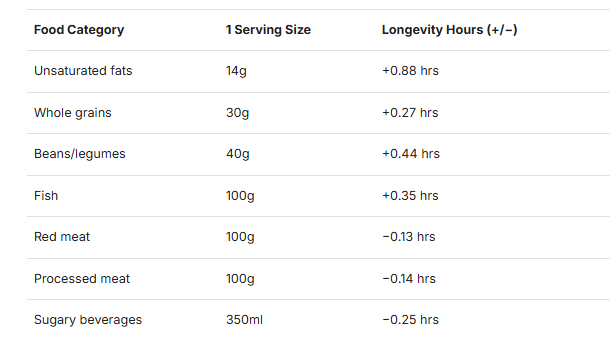
These values reflect changes from typical Western dietary patterns to longevity-optimizing intake levels, with the largest gains coming from foods most Americans under-consume.
What Seven Participants Learned
Over 12 weeks, participants tracked both diet and exercise—continuing the HIIT, strength training, and walking from previous Challenges while adding food monitoring. The group walked 660,000 steps, averaging 12,000 steps weekly. VO2max, resting heart rate, heart rate variability, and strength metrics remained at the levels achieved in previous challenges.
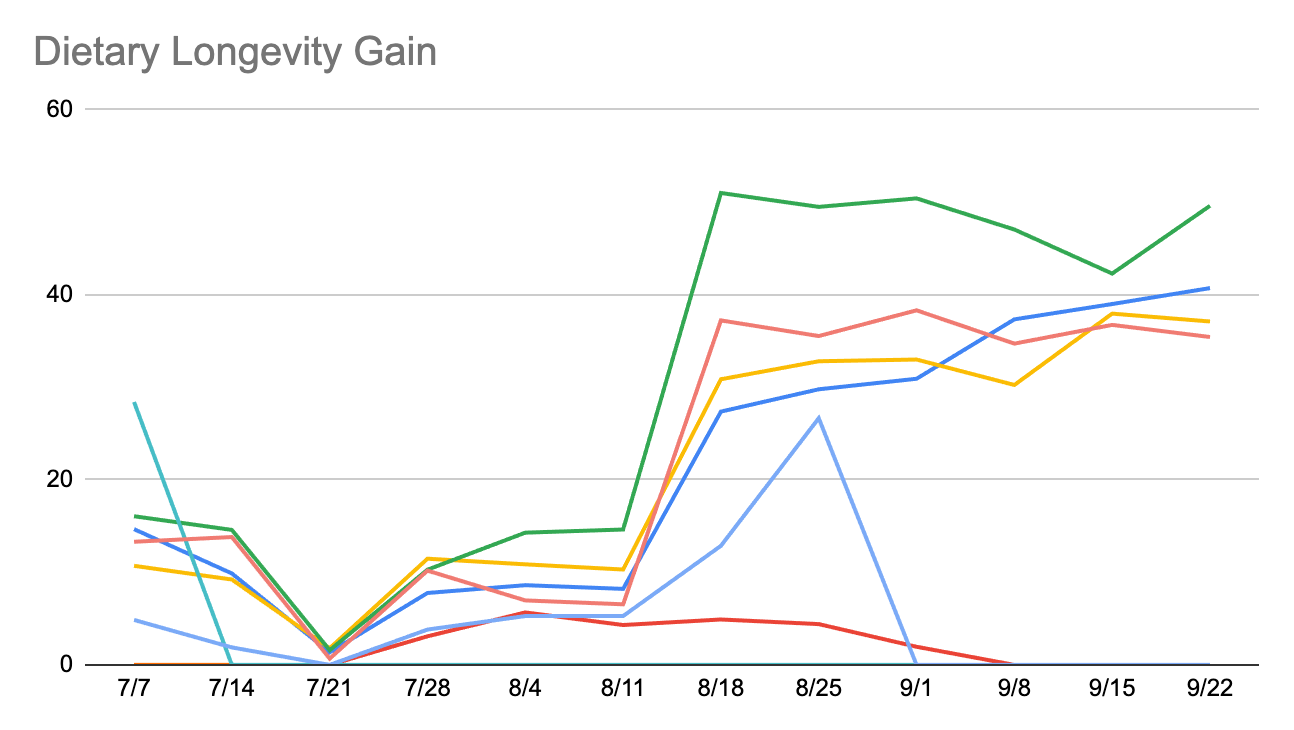
The dietary improvement showed steady progression: average weekly longevity hours increased from 15 hours in week one to 41 hours by week 12. Unsaturated fats contributed the most total hours (+261), followed by whole grains (+126 hours). Fish and legumes ranked lower in total contribution only because participants consumed them less frequently—per serving, beans ranked second (+0.44 hrs) and fish third (+0.35 hrs). Red meat cost the group 42.9 hours and sugary beverages 4 hours over the challenge period.
These numbers align with research showing sustained dietary changes from Western to Mediterranean patterns add 6-11 years to life expectancy for 40-year-olds2. The biggest gains come from whole grains, nuts, and fruits while reducing sugar-sweetened beverages and processed meats.
The Floor Under Progress
One participant observation captured the Plate Challenge’s practical value: “Can’t outrun a bad diet.”
When participants missed exercise sessions but maintained food tracking, they still banked longevity hours. Nutrition created a floor that prevented zero days. On off-days from HIIT, strength, and walking, food choices alone kept progress moving forward. This matters for long-term adherence—bad weeks happen, but tracking food maintained momentum when exercise faltered.
The challenge revealed another practical insight: keeping track itself was challenging. Like any habit, consistency required effort, and occasional tracking lapses occurred. But the visibility of seeing daily choices convert into hours motivated continued engagement.
Behavior Changes That Stuck
Beyond measurable metrics, participants reported shifts in awareness and habits:
Increased mindfulness about beverages: “I didn’t drink much sugary beverages to begin with, but didn’t realize how bad they are until more recently. I now make more effort to avoid them.”
Greater dietary diversity: “It really pushed me to build and maintain daily diverse eating habits” and “Varied ingredients for meals, and adding in nuts, avocados, legumes, tea, etc.”
Sustained avoidance patterns: “Found it easy to avoid sugary drinks and processed meats, but harder to get in all the ‘better’ foods more often.”
One participant described the challenge as pushing them toward “diversification by adding beans and kimchi and such to my main meals”—small additions that compound over time.
These qualitative changes don’t appear on progress boards but determine whether interventions last beyond challenge periods.
Secondary Benefits: Sleep, Energy, and Recovery
Participants noted improvements beyond the tracked metrics:
“I now sleep better (wife says I snore less than I used to, but not sure if it is related). I gained around 4kg, which I think/hope is mostly muscle mass. I am noticeably stronger now compared to early 2024. Have less back pain.”
“I noticed real improvements to things like sleep quality, energy, and less stress when I started walking significantly more than usual.”
These observations align with systematic review findings showing Mediterranean diet adherence correlates with better sleep quality, adequate sleep duration, reduced daytime sleepiness, and fewer insomnia symptoms3.
What Participants Valued
The focused approach on specific healthy foods worked better than previous iterations that asked participants to select different interventions every two weeks. Clear targets—unsaturated fats, whole grains, legumes, fish—made tracking straightforward and built consistent habits over the 12-week period.

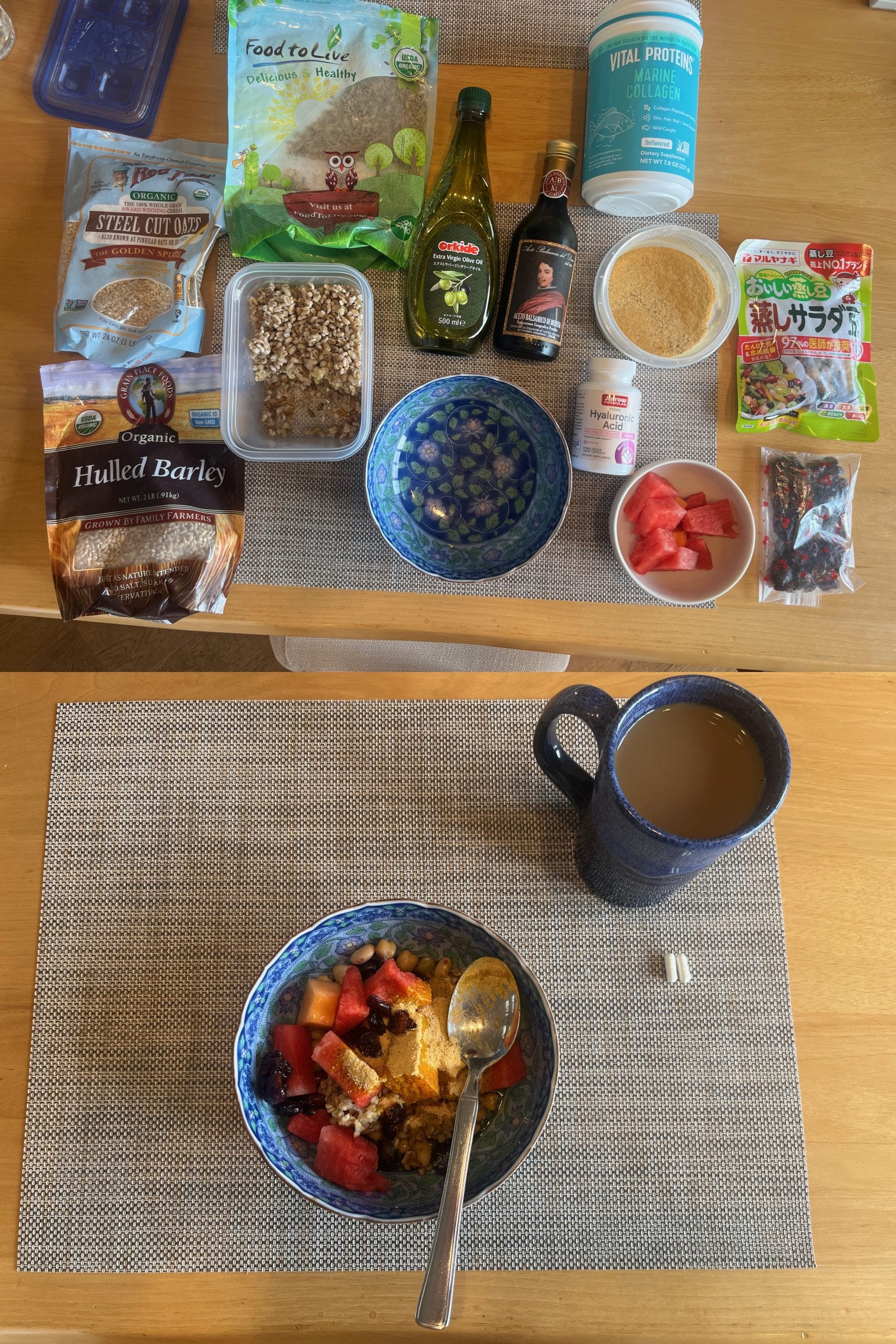
Sharing breakfast pictures provided practical inspiration for hitting daily targets. Seeing how others incorporated nuts into oatmeal, added avocado to toast, or built whole-grain bowls with legumes made the abstract serving goals concrete and achievable.
Participants reported lasting dietary changes: increased mindfulness about beverages, greater variety in meals, and sustained avoidance of processed meats and sugary drinks. Several noted continuing these habits beyond the challenge end date.
The Simple Math
The Plate Challenge demonstrates a straightforward principle: longevity compounds from consistent, measurable choices.
For 20-year-olds making sustained dietary changes, research models predict adding more legumes, whole grains, and nuts while reducing red and processed meat could add over 10 years to life expectancy. For 40-year-olds, gains still reach 8-11 years. For 60-year-olds, 8-9 years. Even 80-year-olds gain 3-4 years from dietary optimization4.
The Plate Challenge tracked 12 weeks. Sustained over the years, these habits generate substantial returns.
No extremes required. The “feasibility approach diet”—a midpoint between typical Western and optimal diets—still produces meaningful gains: 6-7 years for 20-year-olds, 5-6 years for 40-year-olds, 4-5 years for 60-year-olds.
2026 Unaging Challenge
For 2026, the longevity hour tracking system will extend across all four challenge quarters. Participants will track cumulative longevity hours from cardio, strength, steps, and diet throughout the full year, providing visibility into total expected lifespan gains from the complete program.
The Plate Challenge will add benchmark targets to accelerate healthy food habit formation. Rather than passive tracking, participants will work toward specific food intake goals each week, building dietary patterns faster while maintaining the focus on evidence-based food categories that worked well in 2025.
Register for the 2026 Challenge here!